


Best Battery Sprayers for Agriculture in India Explore Powerful Spraying Machines
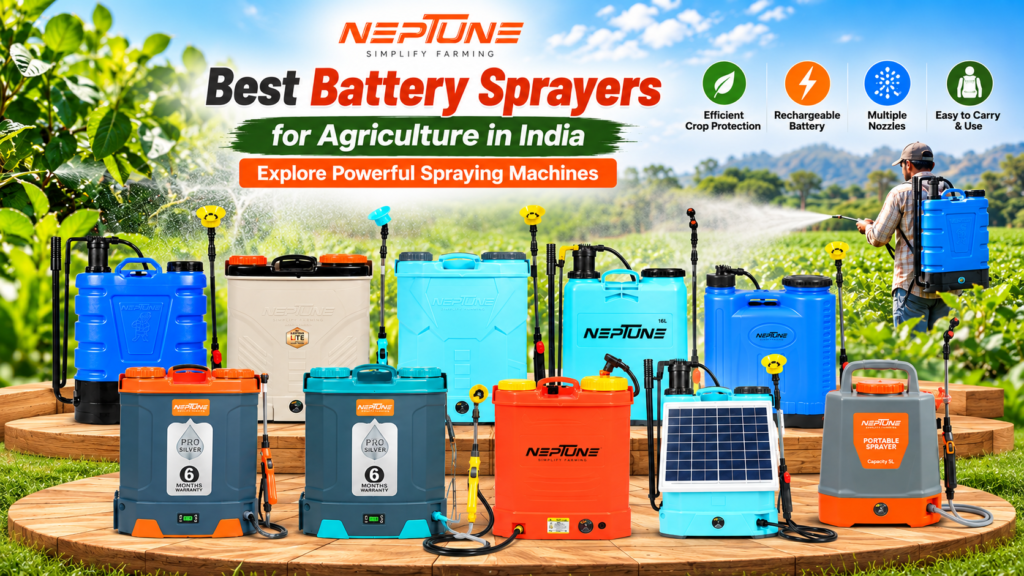
Modern farming requires efficient tools that can save time, reduce physical effort, and make everyday agricultural operations easier. One such useful piece of farming equipment is the battery sprayer for agriculture.
Farmers regularly need to spray pesticides, insecticides, fungicides, herbicides, and liquid fertilizers to protect crops and maintain healthy plant growth. Traditional manual sprayers require continuous hand pumping to generate pressure, which can become tiring during regular or extended spraying operations.
A battery operated sprayer solves this problem by using a rechargeable battery and electric pump to generate spraying pressure automatically. This makes spraying more convenient and reduces the need for repetitive manual pumping.
If you are planning to buy a battery sprayer online in India, this complete guide will help you understand how battery sprayers work, their benefits, different types, tank capacities, battery options, applications, maintenance requirements, and the important features you should check before purchasing one.
What Is a Battery Sprayer?
A battery sprayer is an agricultural spraying machine powered by a rechargeable battery. Instead of manually pumping a lever to create pressure, an electric motor and pump move the liquid from the tank through a hose and spray nozzle.
A typical agriculture battery sprayer may include:
- Rechargeable battery
- Electric motor and pump
- Chemical or liquid tank
- Spray hose
- Spray lance or spray gun
- Multiple spray nozzles
- Battery charger
- Shoulder straps
- On/off switch
- Battery level indicator or digital display, depending on the model
Battery sprayers are commonly used on farms, vegetable fields, nurseries, gardens, orchards, and other agricultural areas.
How Does a Battery Operated Sprayer Work?
The working mechanism of a battery operated sprayer is relatively simple.
Rechargeable Battery → Electric Motor → Pump → Hose → Spray Lance/Gun → Nozzle
When the sprayer is switched on, the battery supplies power to the electric motor. The motor operates the pump, which draws liquid from the tank and pushes it through the hose under pressure.
The liquid then reaches the spray lance or gun and exits through the selected nozzle.
Different nozzle designs can provide different spray patterns depending on the application. This allows farmers to select a suitable spraying pattern for crop protection, gardening, nursery work, and other applications.
Benefits of a Battery Sprayer for Agriculture
There are several reasons why farmers choose a battery sprayer for farming instead of a traditional manual sprayer.
1. Reduces Manual Pumping
One of the biggest advantages of a battery sprayer is that it reduces the need for continuous hand pumping.
The electric pump automatically generates spraying pressure, allowing the operator to concentrate more on directing the spray and achieving proper crop coverage.
2. Saves Time During Regular Spraying
Manual pumping can slow down spraying work, particularly when a farmer needs to cover a larger area.
A battery spray machine continuously operates the pump while the sprayer is switched on, helping make routine spraying operations more convenient and efficient.
3. More Consistent Spray Pressure
The pressure of a manual sprayer can vary depending on how quickly and continuously the operator pumps.
A battery-powered pump can provide relatively consistent pressure, depending on the model and battery condition. Consistent pressure can help achieve more uniform spraying.
4. Reduced Physical Effort
Regular manual pumping can become tiring, especially during extended spraying sessions.
By automating the pumping process, a rechargeable battery sprayer reduces repetitive arm movement and makes routine spraying easier for the operator.
5. Rechargeable Operation
Battery sprayers do not require continuous manual pumping or a petrol engine for operation. Their batteries can be charged using a compatible charger and reused for future spraying operations.
6. Multiple Nozzle Options
Many agricultural battery sprayers support different nozzle attachments.
Depending on the model, different nozzles can be used to achieve fine mist, focused spray, wider coverage, or other spray patterns suitable for different agricultural requirements.
Common Uses of Battery Sprayers
A battery sprayer machine for agriculture can be used for a wide variety of spraying applications.
Common uses include:
- Pesticide spraying
- Insecticide application
- Fungicide spraying
- Herbicide application
- Liquid fertilizer application
- Crop protection
- Vegetable farming
- Nursery spraying
- Garden maintenance
- Orchard applications
- General plant care
Always follow the chemical manufacturer’s recommended dilution, application, protective equipment, and safety instructions when spraying agricultural chemicals.
Battery Sprayer vs Manual Sprayer
Both battery and manual sprayers can be useful, but their operation is different.
A manual sprayer requires the operator to repeatedly pump a lever to create pressure. A battery sprayer uses an electric pump powered by a rechargeable battery.
For occasional or very small spraying jobs, a manual sprayer may be sufficient. However, farmers who perform spraying frequently may find a battery operated agriculture sprayer more convenient because it reduces repetitive pumping.
Battery sprayers require charging and involve additional electrical components, while manual sprayers have a simpler operating system.
The right option depends on spraying frequency, farm size, budget, and individual requirements.
Single Motor vs Double Motor Battery Sprayer
When searching for the best battery sprayer for agriculture, you may find both single motor and double motor models.
Single Motor Battery Sprayer
A single motor battery sprayer can be suitable for routine agricultural spraying.
It may be used for:
- Vegetable farms
- Nurseries
- Gardens
- Regular pesticide spraying
- Small and medium spraying operations
Double Motor Battery Sprayer
A double motor battery sprayer may be designed for applications requiring higher flow or stronger spraying performance, depending on its actual pump specifications.
It can be considered for:
- Faster spraying requirements
- Wider coverage
- Higher flow applications
- Regular farm use
- More demanding spraying jobs
However, motor count alone should not determine your purchase.
Always compare the actual flow rate, pressure, battery capacity, pump specifications, tank capacity, and intended application of the sprayer.
Lithium Battery Sprayer vs Lead-Acid Battery Sprayer
Battery type is another important factor when choosing an agriculture sprayer.
Lithium Battery Sprayer
A lithium battery sprayer can be a good choice for users who prefer portability.
Depending on the design, lithium-ion batteries can provide advantages such as:
- Lower battery weight
- Easy portability
- Rechargeable operation
- Convenient handling
Lead-Acid Battery Sprayer
Lead-acid batteries are also widely used in agricultural sprayers and are commonly found in many economical models.
When comparing lithium and lead-acid sprayers, do not consider battery chemistry alone.
Check the:
- Battery voltage
- Ah capacity
- Charging time
- Expected operating time
- Replacement battery availability
- Charger compatibility
- Product warranty
Understanding 12V Battery Sprayers
The 12V battery sprayer is a commonly available configuration for agricultural spraying.
You may find models with different battery capacities, such as:
12V 8Ah Battery Sprayer: Suitable for various routine spraying applications depending on pump specifications.
12V 12Ah Battery Sprayer: Offers higher battery capacity than an 8Ah configuration.
12V 14Ah Battery Sprayer: Can be considered when higher stored battery capacity is required.
A higher Ah rating generally represents greater battery capacity, but it does not guarantee a specific spraying time.
Actual operating time depends on factors such as motor power, pump load, pressure setting, battery condition, temperature, and usage pattern.
Choosing the Right Tank Capacity
Tank capacity directly affects how much liquid you can carry at one time.
10L Battery Sprayer
A 10 litre battery sprayer is compact and can be useful for gardens, nurseries, and smaller spraying applications.
12L–13L Portable Battery Sprayer
These models can provide a balance between portability and liquid capacity. They can be useful for users who do not want to carry a large knapsack tank.
16L–18L Battery Sprayer
An 18 litre battery sprayer can offer a practical balance between capacity and portability for regular agricultural applications.
20L Battery Sprayer
A 20 litre battery sprayer carries more liquid and can reduce the frequency of refilling during spraying.
However, remember that a larger tank becomes heavier when filled. Operator comfort should therefore be considered alongside tank capacity.
How to Choose the Best Battery Sprayer for Agriculture
When you buy a battery sprayer online, do not select a product based only on price. Compare the important specifications carefully.
Check Battery Capacity
Look at both battery voltage and Ah capacity. Choose a battery configuration suitable for your expected spraying workload.
Compare Pump Performance
Check the manufacturer’s specified flow rate and pressure.
If you are comparing single and double motor sprayers, use actual pump specifications rather than motor count alone.
Choose the Correct Tank Size
Select tank capacity based on the area you normally spray and the amount of weight you can comfortably carry.
Check Nozzle Options
Multiple nozzle options can make an agriculture sprayer more versatile for different spraying patterns and applications.
Check the Spray Lance or Gun
Consider the lance material, length, adjustability, grip, and compatibility with the supplied hose and nozzles.
Look for Comfortable Shoulder Straps
Comfortable and adjustable straps are especially important for knapsack sprayers that may be carried for extended periods.
Check the Battery Indicator
A battery level indicator or digital display can make it easier to monitor the remaining battery charge.
Check Spare Parts Availability
Availability of replacement components can be important for long-term ownership.
Useful spare parts may include:
- Battery
- Charger
- Pump
- Motor
- Hose
- Nozzles
- Spray gun
- Spray lance
- Switches
- Connectors
Battery Sprayer Maintenance Tips
Regular maintenance can help keep your agriculture battery sprayer in good working condition.
Clean After Every Use
Do not leave chemical solution inside the tank unnecessarily after spraying. Follow the chemical and sprayer manufacturer’s instructions for cleaning the tank and spraying system.
Clean the Nozzle and Filter
A blocked nozzle can affect the spray pattern. Inspect and clean nozzles and filters regularly.
Maintain the Battery
Use the recommended compatible charger and follow the battery manufacturer’s charging and storage instructions.
Avoid storing the machine in conditions that may damage the battery or electrical components.
Check the Hose and Connections
Inspect the hose, connectors, spray gun, and lance for leakage, looseness, or visible damage before use.
Store in a Clean and Dry Place
After cleaning, store the sprayer in a dry and protected location away from unnecessary moisture and extreme storage conditions.
Buy Battery Sprayer Online in India
When comparing battery sprayer prices in India, price should not be the only deciding factor.
Before purchasing, compare:
Battery Capacity + Tank Size + Motor & Pump + Flow Rate + Pressure + Nozzles + Comfort + Accessories + Spare Parts Availability
A properly selected sprayer should match your actual farming and spraying requirements.
At Crop10, you can explore battery sprayers and other agricultural equipment for different farming requirements.
Whether you need a 12V battery sprayer, lithium battery sprayer, double motor battery sprayer, portable sprayer, knapsack sprayer, or other farm equipment, compare the product specifications carefully before selecting the right model.
Conclusion
A battery sprayer for agriculture can make regular crop spraying more convenient by reducing continuous manual pumping and providing battery-powered spraying operation.
Today, farmers can choose from different options including 12V battery sprayers, lithium battery sprayers, single motor sprayers, double motor battery sprayers, portable sprayers, and 20 litre battery sprayers.
Before purchasing, compare battery capacity, pump performance, pressure, flow rate, tank size, nozzle options, operator comfort, charger compatibility, and spare parts availability.
Choosing a battery sprayer according to your actual farm requirements is more important than simply selecting the cheapest or highest-capacity model.
For battery sprayers, agriculture sprayers, farming equipment, agricultural machinery, and farm tools online in India, explore the available options at Crop10.in.
Frequently Asked Questions About Battery Sprayers
Which battery sprayer is best for agriculture?
The best battery sprayer depends on farm size, crop type, spraying frequency, required pressure, tank capacity, battery capacity, and operator preference.
Is a 12V battery sprayer suitable for farming?
12V battery sprayers are commonly available for agricultural applications. Check battery Ah, pump output, tank size, and product specifications to determine whether a particular model suits your needs.
Is a double motor battery sprayer better?
A double motor model may offer higher flow or pressure depending on its design. Compare actual pump specifications rather than choosing only by the number of motors.
What size battery sprayer should I buy?
Smaller 10L–13L sprayers are convenient for portable applications, while 16L–20L models provide higher liquid capacity. Choose according to your spraying area and carrying comfort.
Can battery sprayers be used for pesticides?
Suitable agricultural battery sprayers can be used for pesticide and other approved agricultural chemical applications. Always follow the chemical manufacturer’s usage and safety instructions.